Intentional documentation means knowing what is about to happen before it does. It means reading a room, anticipating a moment, and being positioned when it unfolds. It means caring about the quiet stuff as much as the big stuff: the way your mom squeezes your hand right before you walk down the aisle, the look your partner gives you during a toast when they think no one is watching.
I'm Victory, a Washington wedding photographer based in Tacoma and serving couples all over the PNW. Below is a look at how my team and I actually approach a wedding day, from the planning conversations that happen weeks before, to the last light of golden hour. If you've ever wondered what your photographer is doing and why, this is for you.
It Starts Before the Day Does
The pre-wedding consultation is not a formality. It's where the actual work begins, so that by the time your wedding day arrives, we already know your timeline inside and out. We have organized the family portrait lineup. We know which moments you've said matter most to you. We know who you have hired as vendors and have given suggestions for any you still weren't set on. The groundwork laid beforehand is exactly what makes the day feel seamless.
The Detail Shots Tell the Story Too
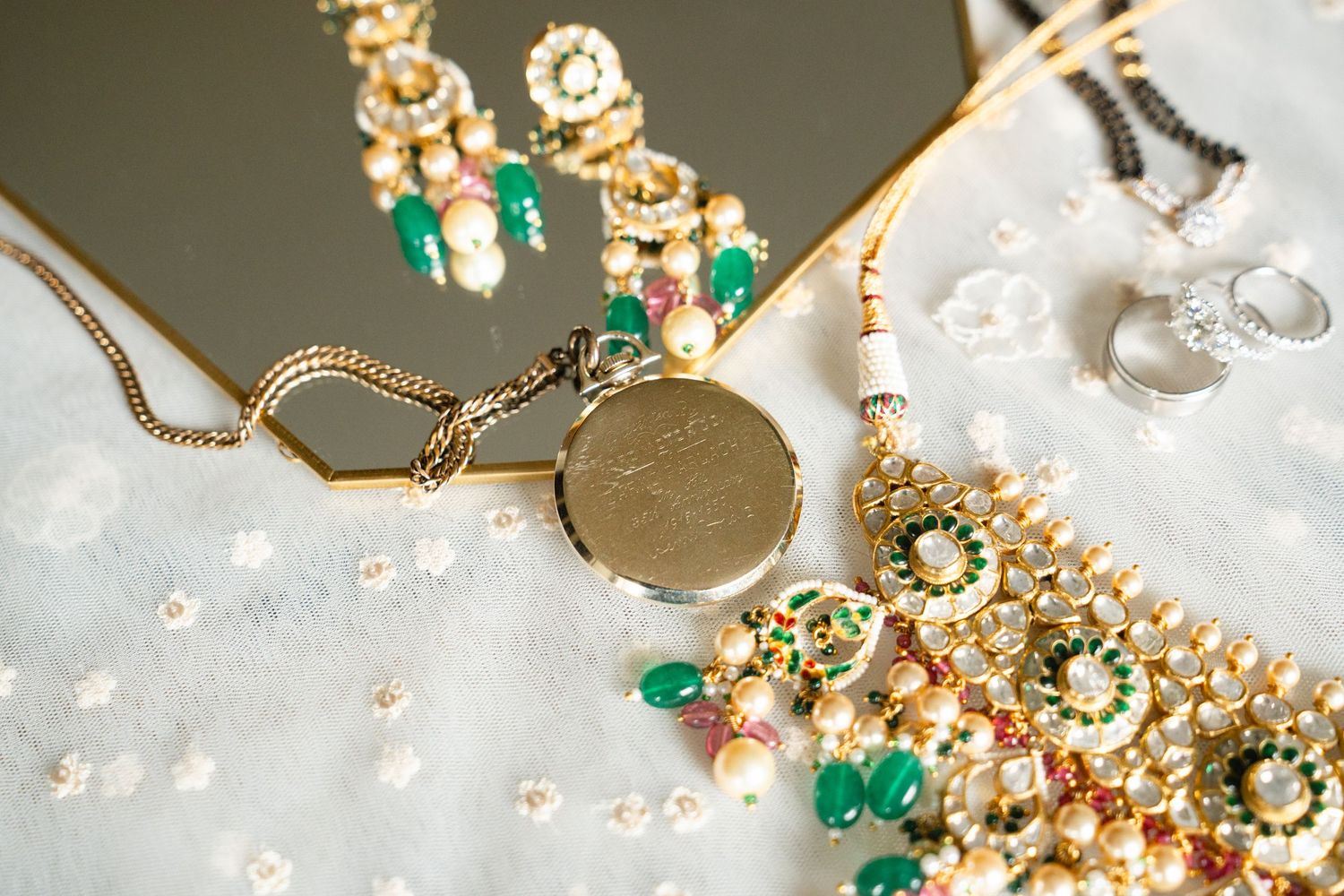
When my team arrives, we go straight to the details before anything else. Not because they're filler, but because they're context. I ask couples to set aside a small collection of items for detail shots. Rings and ring boxes, vow books, invitations, extra florals, perfume, shoes, jewelry. These are the things you carefully chose for this day, and they deserve photographs that reflect that care. Having them gathered and ready when we arrive means we're not scrambling, and you're not stressed. The invitation suite tells guests something about who you are as a couple before they even walk through the door. The rings sitting in that box you picked out carry a special sentiment that can't be replaced. The dress hanging in the window light is part of the story, too. These images set the scene for everything that follows, and they're worth getting right.
Arriving while the bridal party is still getting ready is also intentional. That time of morning has its own energy. There's laughter and nerves, and someone's mom is trying not to cry while zipping up the back of a dress. Some of the most real moments of the entire day happen in that room before the ceremony, and we want to be there for them.
Posing Without It Feeling Like Posing
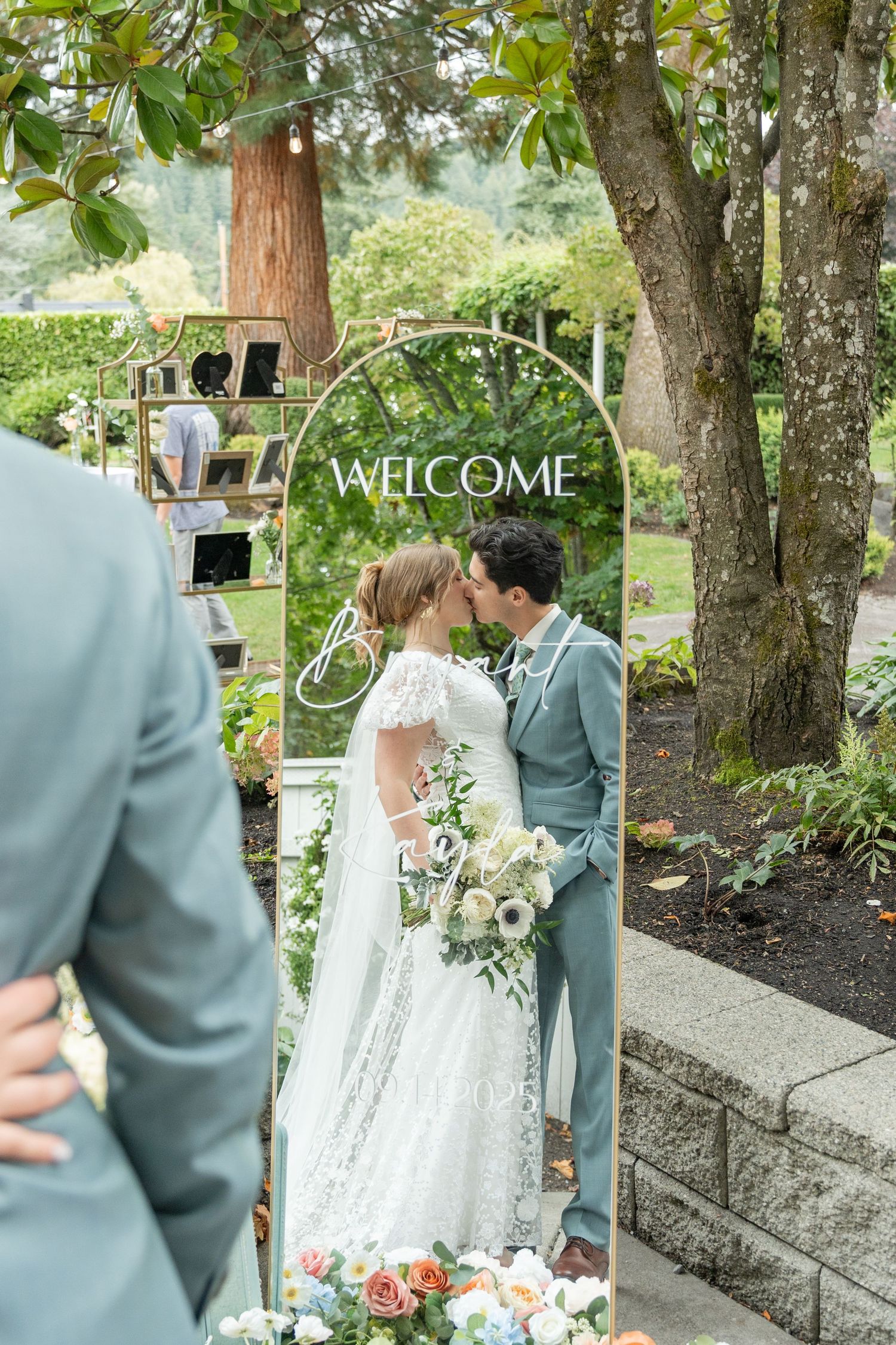
This is the one I hear about most often before a wedding. "We're not good at posing." "We're going to be so awkward." "I hate how I look in photos." Here's the thing: We don't hand people a list of positions and tell them to hold still. We give them something to do. Walk hip to hip toward the water. Whisper your favorite trip memory to each other. Spin once and land forehead to forehead. These are movement prompts, not poses. When you're in motion, you stop thinking about the camera, and that's exactly when your real expressions come out. The couples who come in worried they'll look stiff almost always end up being surprised by their gallery. Not because of any trick, but because genuine movement creates genuine images. Your engagement session, included in every wedding package, is also a chance to practice this with me before the wedding day, so you know what to expect.
Balancing Candid and Classic
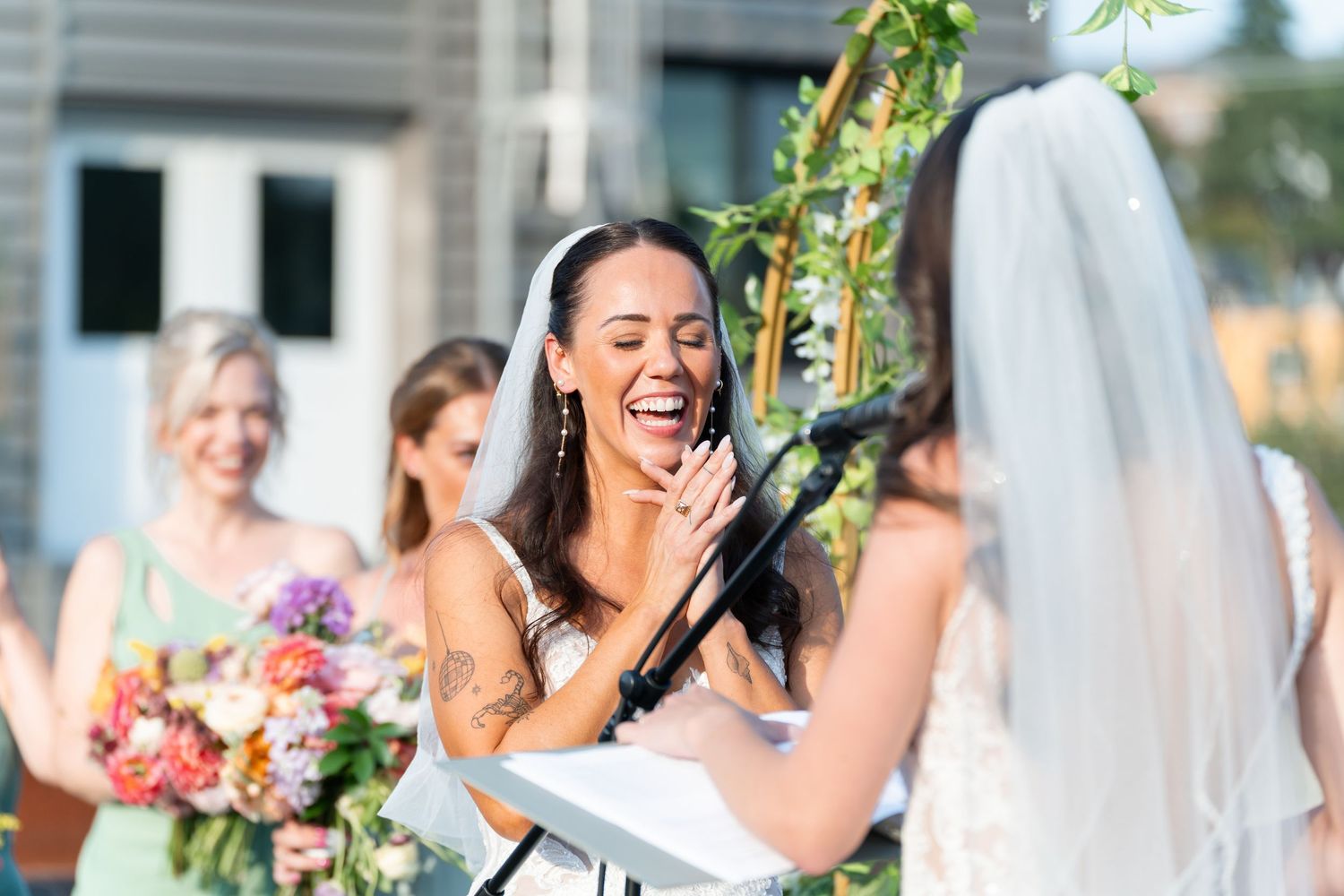
Our style is not 100% fly-on-the-wall documentary, and it's not a stiff portrait session. It's a blend, and where that blend lands shifts depending on what part of the day we're in. During the ceremony, we are observing and anticipating. I'm not directing anything. I'm watching for the laugh that breaks through during the vows, the look between your parents, the flower girl who has completely lost interest and is doing something adorable in the background. These moments don't repeat. Our job is to be ready.
During portraits, we guide gently. We suggest movement, adjusting the light, and keeping energy easy and calm. You should feel like you're just spending time together in a beautiful place, not performing for a camera.
During the reception, we're everywhere. Watching toasts, tracking the dance floor, sitting with the older relatives who always have the best stories. The images that make people cry when they see the gallery for the first time are almost always the ones nobody noticed being taken.
Golden Hour is a must-have
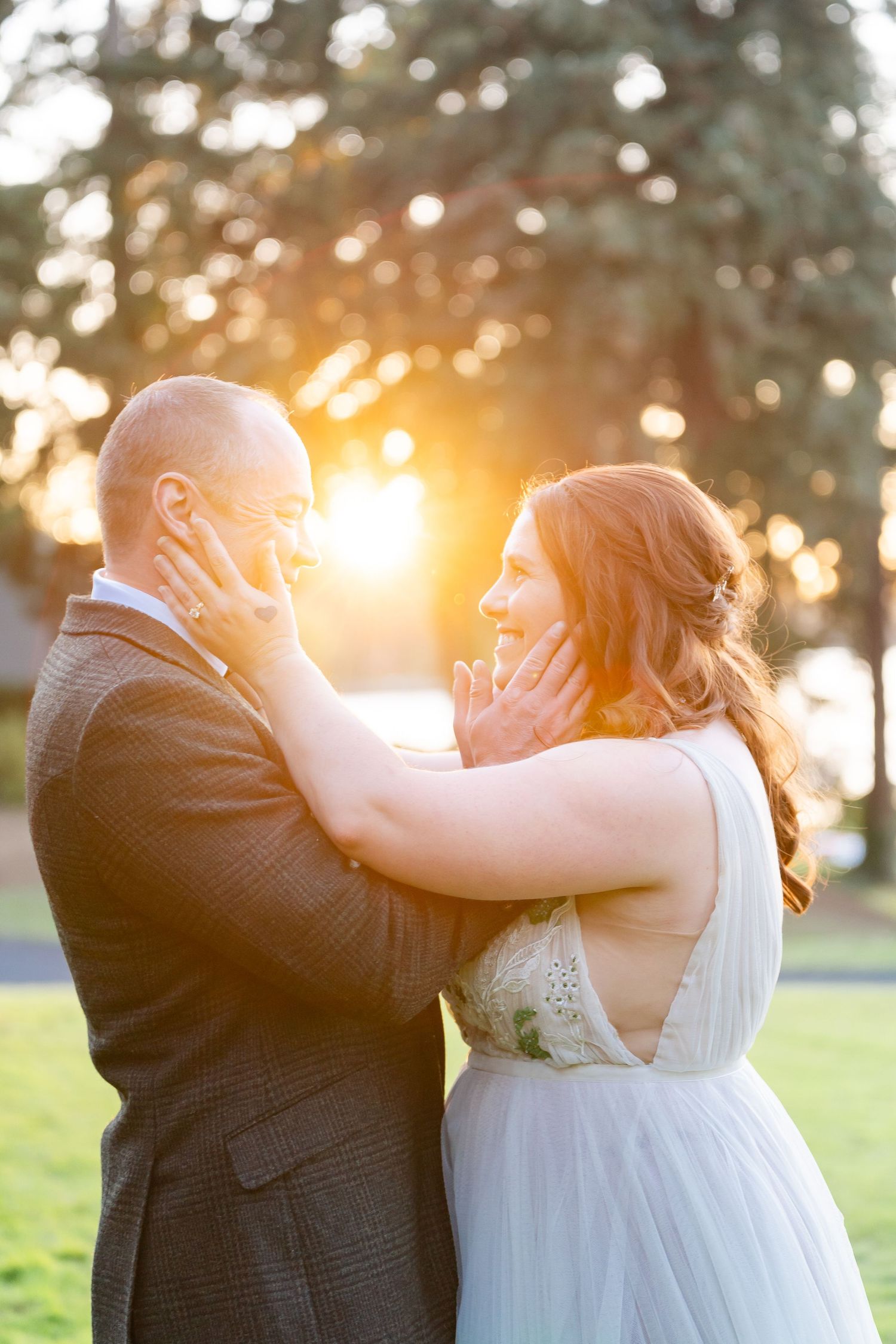
No matter how packed the timeline is, I will always advocate for a 10 to 15-minute window near sunset for portraits. Always. The light in that window is different from anything else during the day: soft, warm, and genuinely flattering in a way that midday light simply isn't. But beyond the light, the energy shifts too. The ceremony is done. The dinner is winding down. You've been "on" for hours with family and guests, and for a few minutes, it's just the two of you. Some of the most meaningful images I've delivered have come from that 15-minute window. Protect it in your timeline. It's worth rearranging almost anything else to make it work.
When There Are Two Photographers
If you book the Wonderland or Enchanted package, your day includes a second photographer. Some couples wonder what that actually changes. Here's what it means practically: I plan your timeline, coordinate the shot list, and edit the images from your wedding. What a second photographer adds is real: two angles on your first look means we catch your partner's face and yours at the same moment. Two people covering the ceremony means nothing gets missed. One photographer genuinely cannot be in two places at once, and on a full wedding day, that matters.
The Rain Plan (Because We're in the PNW)
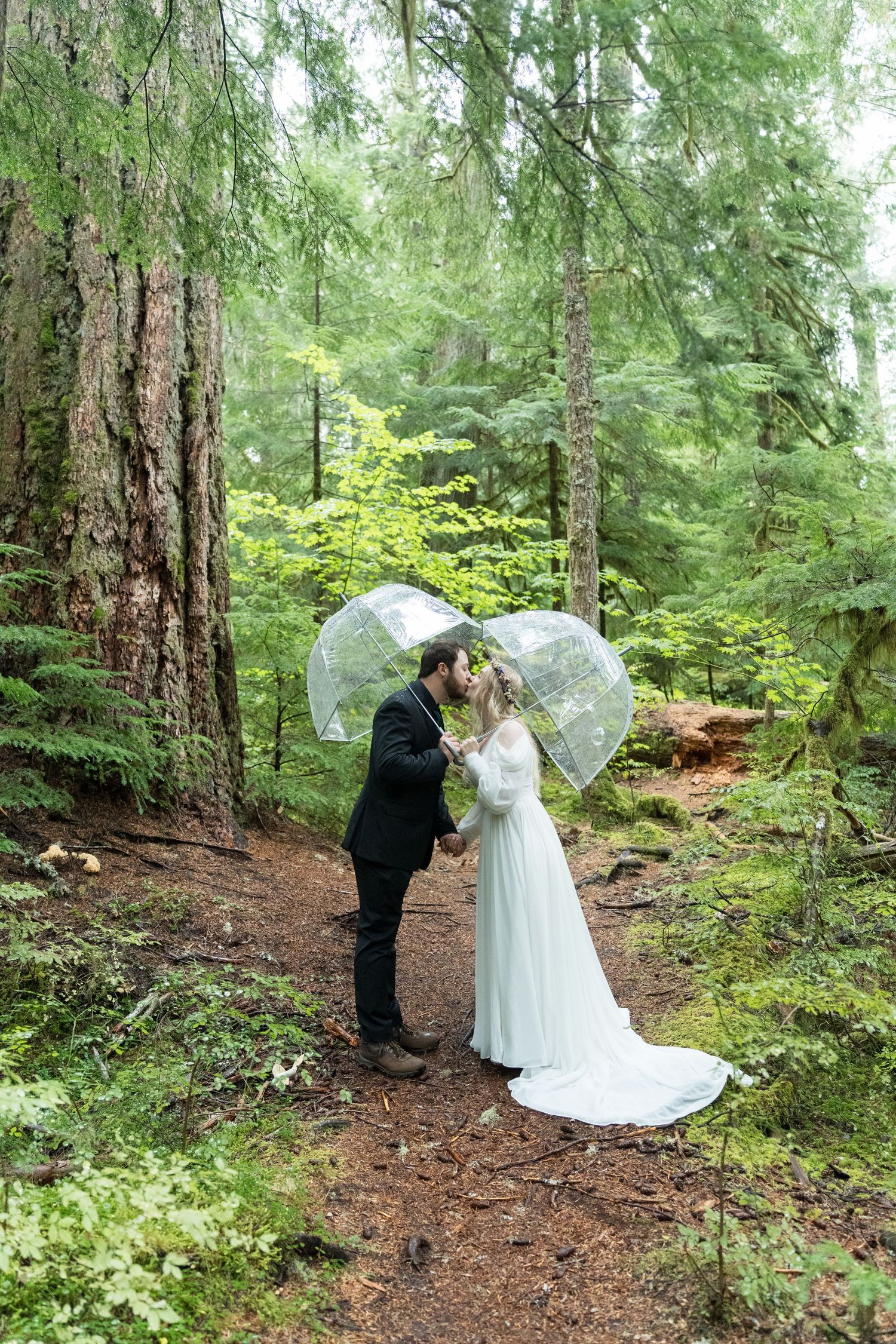
If you're getting married in Washington, you need a photographer who has a real answer for rain. Not a vague "we'll figure it out," but an actual plan. For every outdoor wedding or elopement, we build a rain plan in advance. Clear umbrellas for portraits, covered spots at the venue for family formals, cozy indoor nooks that photograph beautifully. And honestly, overcast light is softer and more flattering than direct sun, so don't count a gray PNW day as a loss. If there's a sunset window, even a brief one, we'll be ready to move fast and catch it. The PNW teaches you to love the gray, and it teaches you to chase the breaks in the clouds when they come.
Frequently Asked Questions
How far in advance do you start planning for a wedding day?
We start with a pre-wedding consultation as soon as you are ready to book your photographer, and I review your timeline in the weeks leading up to the wedding. By the day itself, nothing should be a surprise for anyone on the team.
Do you photograph on Saturdays?
Saturdays are a rest day for me, which means I'm fully recharged and at my best every other day of the week. Sundays, some Fridays, and weekdays are all open, and many venues offer better pricing on those days, too. If you're flexible on date, it's worth exploring.
What if I hate being in front of the camera?
Most of the couples who say this end up loving their gallery. Movement prompts, gentle guidance, and a relaxed pace make a big difference. Your engagement session is also a chance to get comfortable with me and the camera before the wedding day.
What's included in a pre-wedding consultation?
We'll go over your full timeline, talk through your priorities for the day, discuss locations and lighting, and make sure I understand the moments and people that matter most to you. It's also just a chance to connect, so the day feels easy and familiar.
How does having an associate or second photographer work?
My associate photographers are hand-selected and very experienced with weddings. I plan the timeline, direct the day, and edit every image from your gallery. A second shooter adds coverage and angles to catch more moments and helps the timeline run more quickly.
What's the best time of day for portraits?
The hour before sunset is the best light of the day, hands down. For elopements, sunrise is also beautiful and gives you the location entirely to yourself. I'll always help you build a rough timeline if you're wondering how you should plan for lighting.
The best way to get to know our style is an engagement session, so see what it feels like to shoot with Victory Dawn Photography.
Ready to Talk About Your Day?
Documenting with intention means showing up with a plan, staying present, and caring about your story from the first detail shot to the last frame of the night. Every wedding is different, and I genuinely love learning what makes yours yours.
If you're planning a PNW wedding, elopement, or adventure session, I'd love to hear about it. Send me your date and let's figure out which package fits your day.